What does the research say?
Cold plunging has exploded in popularity in recent years, with athletes, wellness enthusiasts, and longevity researchers all exploring the benefits of cold exposure. But as the conversation evolves, an important question has emerged:
Does cold plunging affect women differently?
While research specifically focused on women is still developing, recent studies and expert insights suggest that women can benefit from cold exposure especially when it is approached thoughtfully and aligned with the body’s natural rhythms.
Let’s look at what the science currently says.
What Happens in Your Body During a Cold Plunge
When you immerse your body in cold water, several physiological responses occur almost immediately.
The body activates its cold-shock response, which increases breathing rate, heart rate, and circulation. At the cellular level, cold exposure stimulates the production of cold-shock proteins, which help cells adapt to stress and maintain function.
A 2024 study published in Advanced Biology found that short periods of cold exposure can trigger cellular pathways associated with metabolic health and immune resilience.
Cold exposure has also been linked to:
- improved circulation
- increased metabolic activity
- elevated levels of norepinephrine, which can enhance mood and alterness
These effects help explain why many people report feeling energized, focused, and calm after a plunge.
What Research Says About Cold Plunging for Women
Historically, most cold-exposure research has been conducted on male athletes. However, emerging studies and surveys focusing on women suggest several potential benefits.
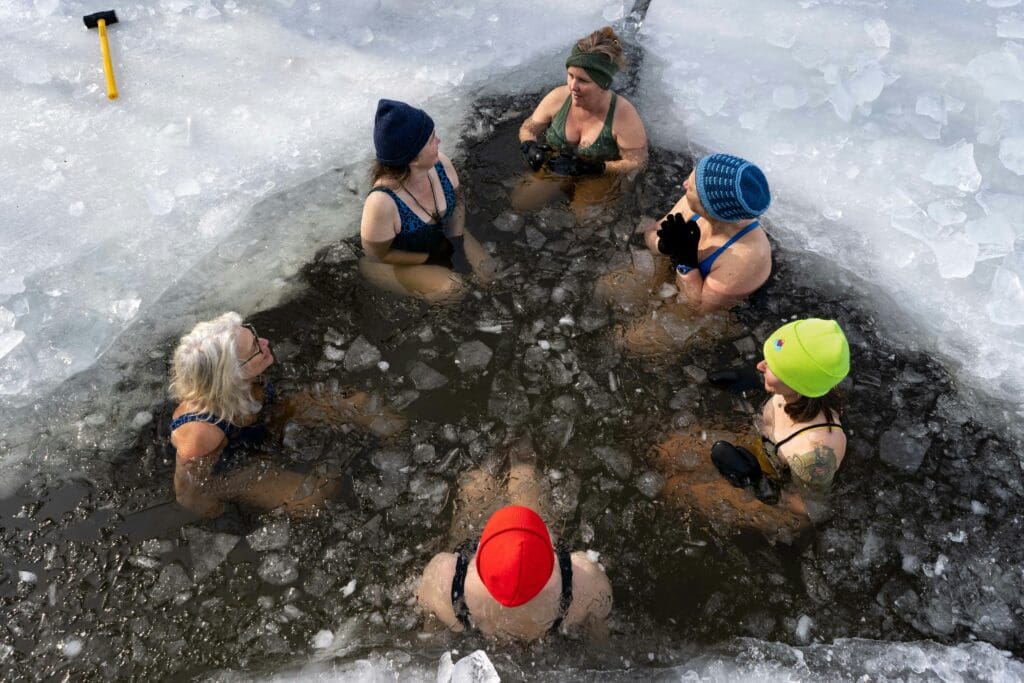
A large survey of women who regularly practice cold-water swimming found improvements in symptoms related to the menstrual cycle, including reductions in anxiety, mood swings, and irritability.
Participants also reported improvements in sleep and overall mental well-being.
Researchers believe these benefits may be related to the way cold exposure stimulates the nervous system and supports stress resilience.
However, scientists emphasize that more research is still needed, as women’s hormonal cycles can influence how the body responds to physical stressors like cold exposure.
Timing Cold Plunges Around the Menstrual Cycle
One emerging idea in wellness research is that women may benefit from adjusting cold exposure based on their menstrual cycle.
Because hormones fluctuate throughout the month, the body’s stress response and temperature regulation can change as well.
General guidance from current research suggests:
Menstrual Phase
Some women prefer shorter or gentler cold exposure during the first days of their period, when energy levels are typically lower.
Follicular Phase (after menstruation)
This phase may be the most resilient window for cold exposure, as rising estrogen levels often support energy and recovery.
Ovulation
Cold exposure can still be beneficial, though extreme temperatures may feel more intense.
Luteal Phase (before menstruation)
The body’s core temperature naturally rises during this phase, which may make cold feel more uncomfortable for some women.
Because responses vary from person to person, researchers emphasize personalization rather than strict rules.
Cold Plunging and Hormonal Balance
Another important consideration is how cold exposure affects the hormonal and stress response systems.
Cold immersion triggers a short-term increase in stress hormones like cortisol and adrenaline. In moderate doses, this type of stress can actually improve the body’s ability to adapt and build resilience.
However, excessive cold exposure combined with other stressors such as intense exercise, sleep deprivation, or chronic stress may overload the nervous system.
For this reason, many experts recommend:
- starting with warmer temperatures (around 50 – 60°F)
- limiting sessions to a few minutes
- gradually building tolerance over time
Consistency and moderation appear to be more beneficial than extreme cold exposure.
The Bigger Picture: Cold Plunging as a Wellness Tool
Cold plunging is not a cure-all, but it can be a powerful wellness practice when used intentionally.
Research suggests cold water immersion may help support:
- mood regulation
- stress resilience
- circulation and recovery
- sleep quality and overall well-being
For many women, the key is listening to the body and adjusting exposure based on energy levels, stress, and overall health.
How to Incorporate Cold Plunging Safely
If you’re new to cold exposure, start slowly.
Consider beginning with:
- water between 50-60* F
- Sessions 1-3 minutes
- practicing 1-3 per week
Pairing cold exposure with heat – such as sauna – is also a traditional approach known as contrast therapy, which has been practiced for centuries in Nordic cultures.
Experience the Nordic Circuit at Ash & Sage
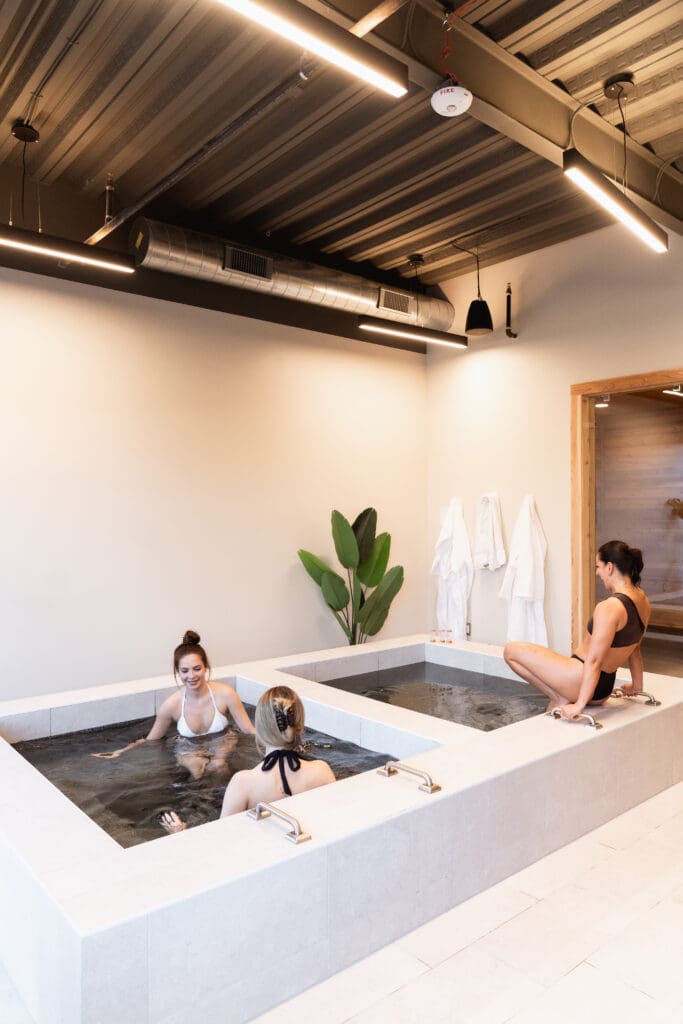
At Ash & Sage Sauna Spa in Melissa, Texas, we offer a modern take on this centuries-old ritual.
Our Nordic circuit combines:
- traditional sauna heat
- invigorating cold plunge (at 50* F)
- restful recovery time with red light therapy
This simple rhythm of heat, cold, and rest can help reset the nervous system and support both physical and mental recovery.
If you’re curious about incorporating contrast therapy into your wellness routine, we invite you to experience it for yourself in Melissa, TX

References
Advanced Biology. Research on cold-shock proteins and cold exposure.
Pound et al., Cold water swimming and women’s health, 2024.
Cain et al., Effects of cold-water immersion on health and wellbeing, PLOS One, 2025.
Stanford Lifestyle Medicine. Mental health effects of cold water immersion.
Research on hormonal responses to cold exposure.
Expert guidance on personalized cold-plunge protocols.
Leave a Reply