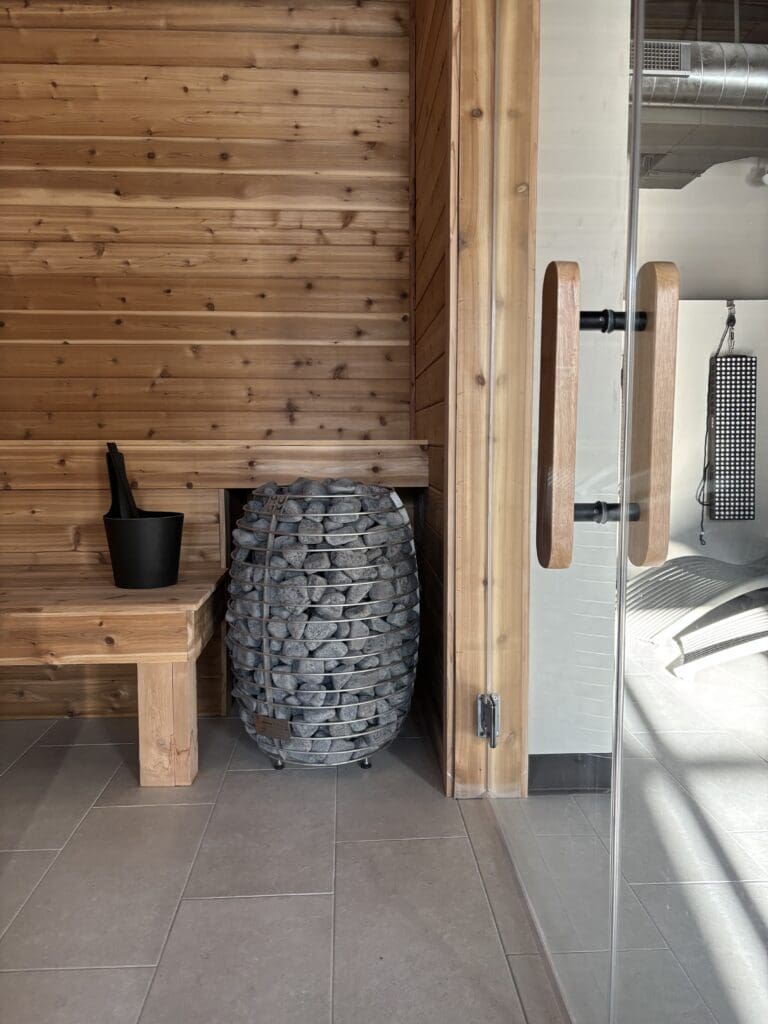
Long before wellness trends, biohacking, red light therapy panels and recovery protocols – there was fire.
My passion and fascination goes back across continents and civilizations, to appreciate that humans have gathered in heat for hundreds of thousands of years. Not just for luxury, but for survival, healing, and connection.
In Finland, the sauna became a sacred space for birth, recovery, and community.
In Ancient Rome, public bathhouses were a routine part of daily life – spaces of cleansing, conversation, and cardiovascular conditioning through heated rooms known as caldarium’s
In Japan, the tradition was in natural hot springs, bathing rituals emphasized purification of body and spirit.
Among many Indigenous North American tribes, sweat lodges were used for physical cleansing and spiritual renewal
In Korea, bathhouses continue centuries-old thermal traditions combining heat, rest, and communal gathering.
Different cultures, different geographies, same instinct.
Heat heals.
At Ash & Sage, you’ll find a Nordic inspired contrast therapy circuit. Here, we say Rooted in Tradition, and that’s more than just Nordic tradition. We’re honoring the centuries-old wisdom shared across civilization that controlled heat strengthens the body and steadies the mind.
And now, modern research is explaining the why.
What happens to your body after 20 minutes in a sauna?
When you step into a sauna heated to 170-190*, your body interprets it as controlled stressor. Your skin warms, your core temperature rises slowly, and your cardiovascular system responds.
Heat as Hormesis: Beneficial Stress
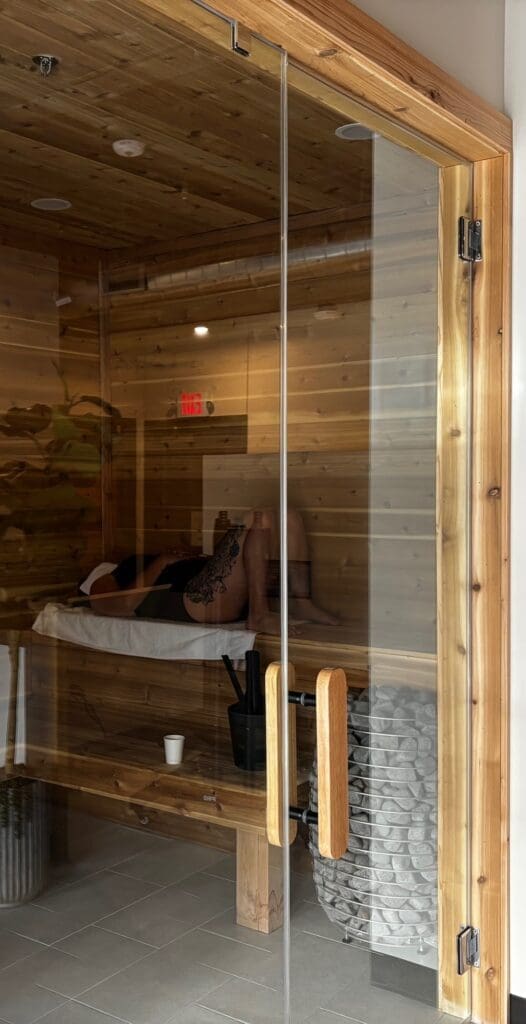
Your core temperature rises slightly above your resting level by 1-2* and your heart rate increases – maybe reaching 100-150 bpm. This activates a biological process called hormesis – a small manageable stress that strengthens the system over time.
A landmark 20 year Finnish study, published in JAMA Internal Medicine, followed more than 2,000 participants and found that frequent sauna use (4-7 times per week) was associated with significantly lower risk of cardiovascular disease and all-cause mortality.
What ancient civilizations practiced intuitively, is now measured scientifically.
Heat conditions the heart.
Cardiovascular Conditioning
As your body works to cool itself: Blood vessels dilate. Circulation increases. Blood pressure may improve over time.
Repeated sauna exposure supports cardiovascular health over time.
Cellular Repair and Heat Shock Proteins
When your core temperature rises slightly, your body produces heat shock proteins.
Normally, your core temperature sits around 98.6* F – but in a sauna, it can rise by about 1-2*
That slight shift is enough to trigger a protective cellular response (without being dangerous.)
These proteins help:
- repair damaged cells
- reduce inflammation
- improve insulin sensitivity
- support muscle recovery
This cellular response may contribute to sauna’s association with longevity and metabolic resilience.
Heat is not just for relaxing, it is adaptive training at the microscopic level.
Nervous System Regulation
Across cultures, heated bathing spaces were also places of stillness.
No screens. No urgency. Just breath and warmth.
Physiologically, sauna triggers a mild rise in cortisol, the body’s primary stress hormone. With repeated exposure, however, the stress response becomes more efficient, and baseline cortisol levels may decrease.
Parasympathetic activity increases.
You leave calmer than you entered.
Not metaphorically.
Neurologically.
Sweating as a Cleansing Mechanism
Sweat rituals have long symbolized purification
Modern studies suggest sweat can excrete trace amounts of heavy metals such as arsenic, cadmium, and lead. More importantly, sweating improves circulation, supports skin function, and contributes to overall metabolic health.
Why Heat Endures Across Civilizations
Sauna and thermal bathing traditions endure because they work.
They build resilience, strengthen communities, create pause.
At Ash & Sage in Melissa, Texas, our sauna practice is a continuation of that human story.
We honor our ancestors’ intuition with modern understanding.
When you step into the heat, you are participating in something older than modern wellness.
You are participating in the wisdom of our ancestors.
Join us at Ash & Sage Sauna Spa

One response to “Ash & Sage Sauna Spa: Rooted in Tradition. Designed for Today.”
-
Test!

Leave a Reply to Andrea Murray Cancel reply